Infinigrid
Production ML for the Norwegian power grid. Forecasting models that watch the electrical system and predict its risks before they bite. Time-series at grid scale, deployed.
deep-dive →machine learning · hardware · systems
Machine learning engineer with hardware roots. 12+ years across production systems and hobby projects. Built on clean code and robust programs.
I build
Three to look at first.
Production ML for the Norwegian power grid. Forecasting models that watch the electrical system and predict its risks before they bite. Time-series at grid scale, deployed.
deep-dive →Industrial optimisation for one of the world's largest aluminium producers. A mix of machine learning, classical optimisation, and the applied math that holds the two together.
NDA · details on requestAdapting a pre-trained vision transformer to a new task with low-rank adapters in the attention layers. Half make-it-work, half an excuse to actually understand why it works.
deep-dive →A non-exhaustive log, 2002 to present.
Size = significance. Hover to preview, click for the deep-dive.
Loading timeline…
The timeline only shows some of the projects I've finished. Like most engineers, starting something new is often more exciting than finishing the old, and a lot of what I know lives in the projects that never quite got there.
The FPGA design that synthesised but I never tested on hardware. The audio plugin I abandoned the moment I'd learned the trick. The model I trained until the loss curve told me what I needed, then walked away from. They're not failures. They're the experiments that taught the techniques that ended up in the projects that did ship.
Who, what, and why the two halves fit together.
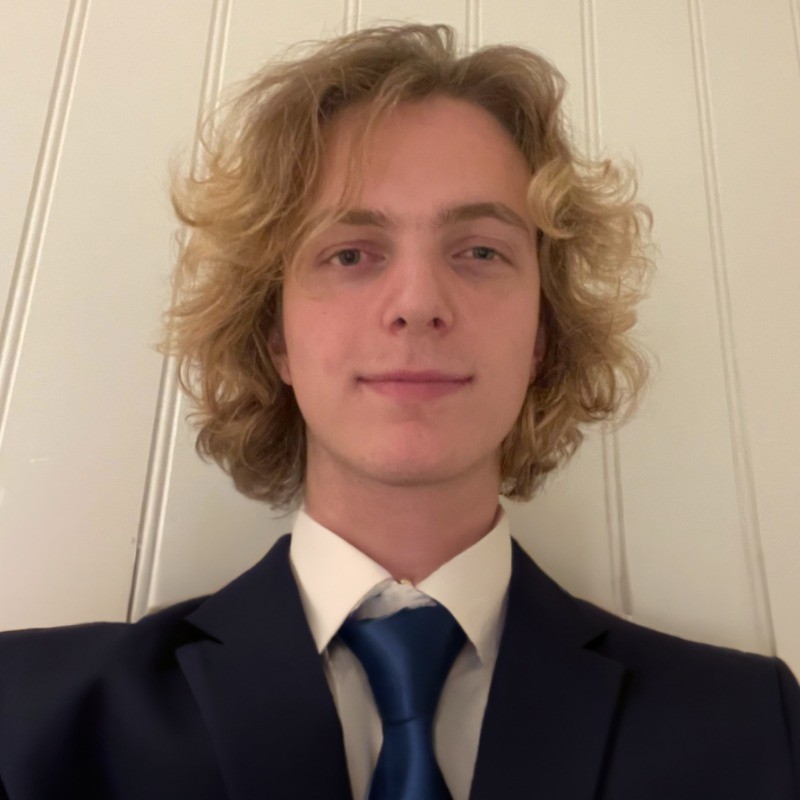
I started writing code at nine. My father is a software developer, and he handed it over early. The first thing I remember being mad about was a coding class that turned out to be drag-and-drop blocks instead of a real keyboard.
Today the work has three loops. Machine learning for the Norwegian public sector, industry, and now Infinigrid, a startup building forecasting models for the electrical grid. Full-stack sharpened in Go and Nuxt: backends, dashboards, pipelines. Hardware: soldered audio front-ends, FPGA filters, a kit-built 3D printer that eventually drew its own portrait.
The two halves feed each other. The CNN that classifies an analog signal is only as good as the op-amp in front of the ADC; the FPGA that filters a transducer only matters if there's a pipeline downstream. I like working where that boundary lives.
Tools by where they sit in the chain.
From physical signal to clean data.
Where the learning happens.
Backends, infra, the unglamorous spine.
The surface a user actually touches.
currently going deeper on grid-scale forecasting causal inference control systems
Open inbox.
Happy to talk research, hardware, or grid-scale ML, especially where the signal-chain crosses the model boundary.